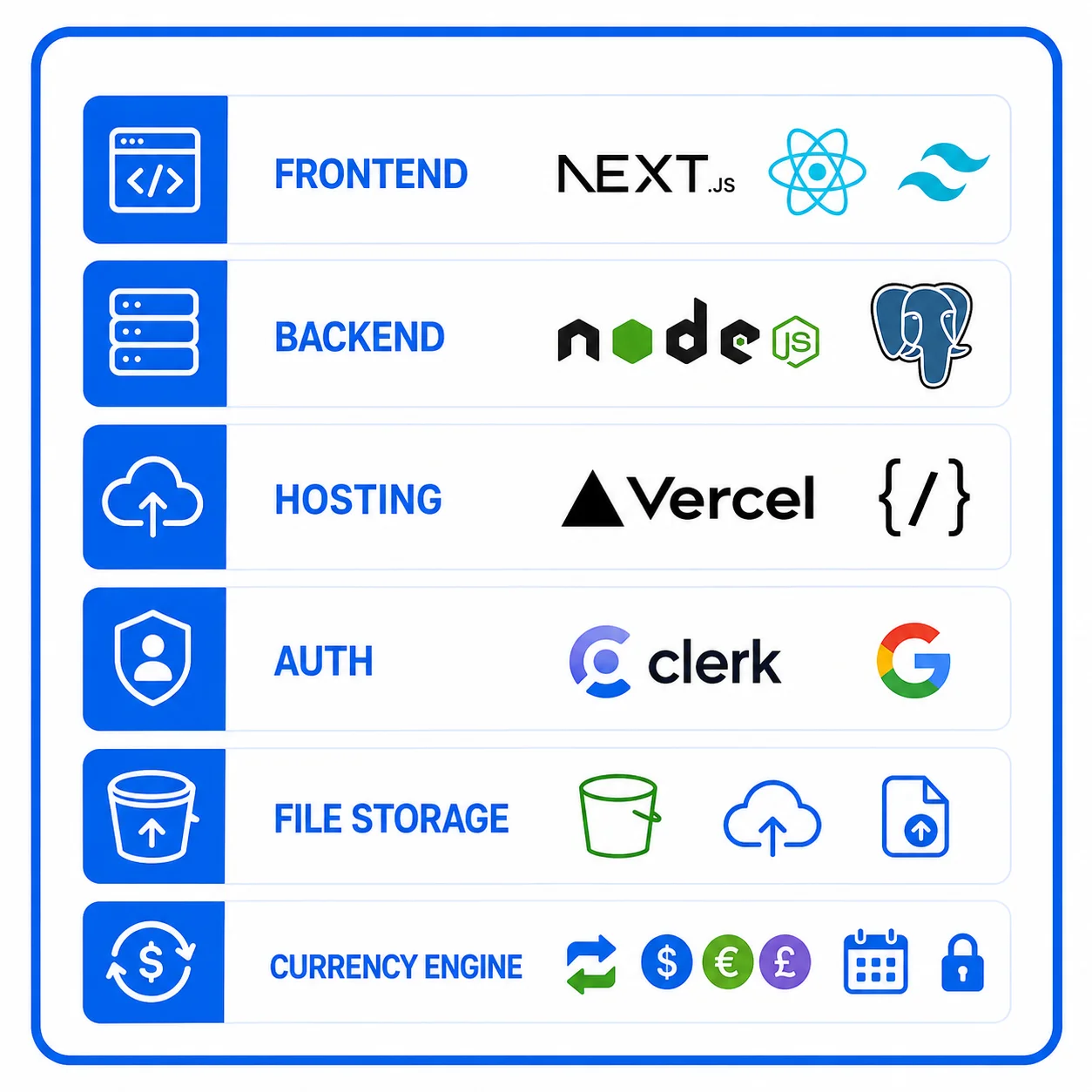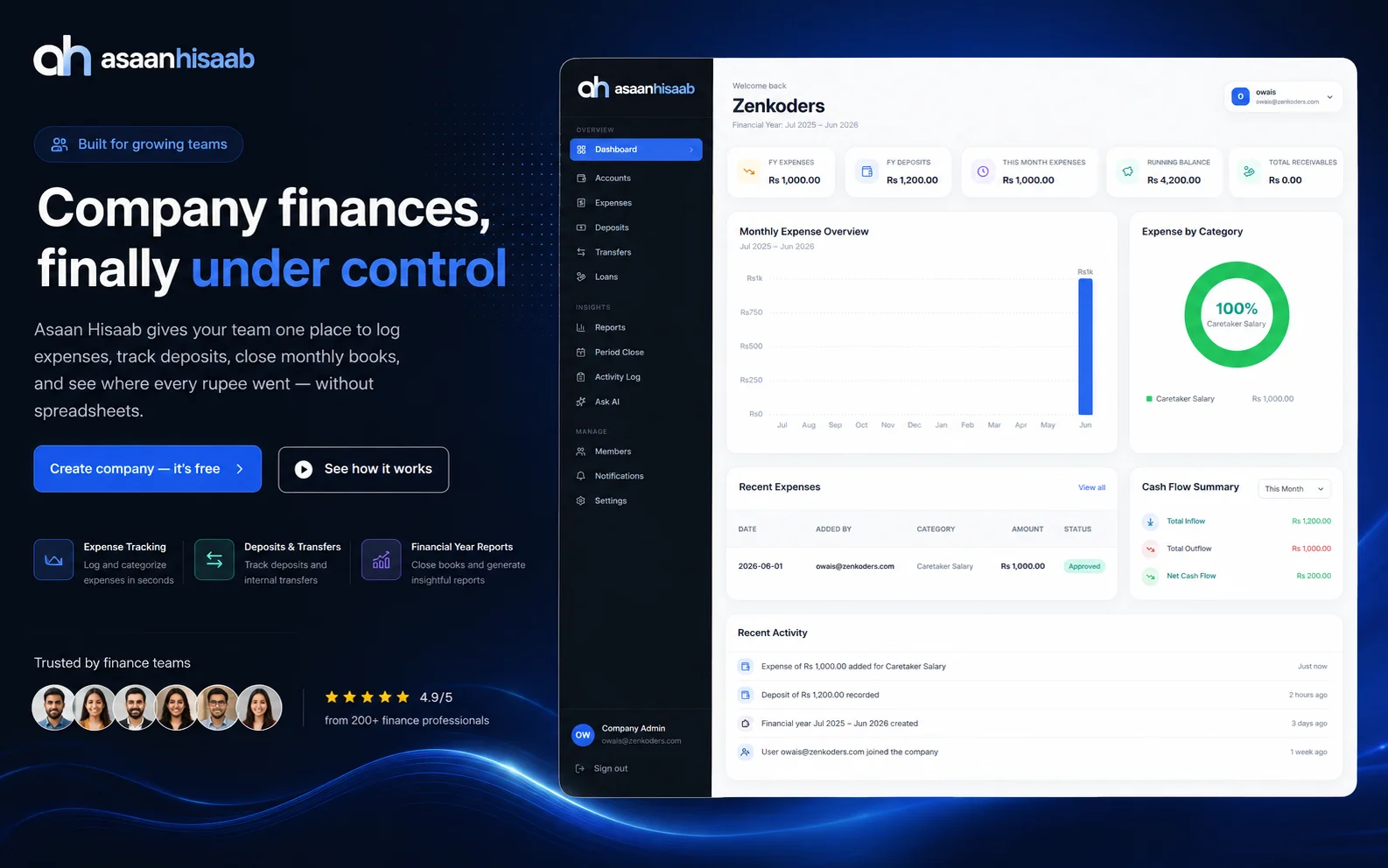

QuickBooks and Xero were not built for Pakistan. Wrong fiscal year, wrong currency defaults, wrong workflows. We built Asaan Hisaab from scratch for the way Pakistani companies actually manage their books.
Industry: FinTech / Accounting Software / B2B SaaS
Type: Web Application for Pakistani SMEs
Every finance manager at a Pakistani SME knows the Friday afternoon feeling: a spreadsheet open in one tab, a bank statement in another, receipts in a WhatsApp folder somewhere, and a month-end close that is going to take the whole weekend.
The accounting tools that exist — QuickBooks, Xero, Zoho Books — are capable products. But they were designed for Western markets. They assume a January-to-December fiscal year. Pakistan’s standard fiscal year runs July to June. They assume USD or GBP as the base currency. Pakistani companies deal in PKR, often alongside USD for software exports or international payments. The workflows assume a formally trained accountant at the keyboard. Most Pakistani SME finance teams are not staffed that way.
Asaan Hisaab means ‘easy accounts.’ That is a promise, not a tagline. We built it to replace the spreadsheet entirely — one place for expenses, deposits, inter-account transfers, monthly closing, and reporting, without needing an accountant to configure it or a developer to maintain it.
Asaan Hisaab was built for growing Pakistani companies — specifically the finance managers, team leads, and business owners who are currently managing company finances in spreadsheets or in accounting tools that were not designed for their market.
The CEO of Zenkoders, Zeeshan Sikander, uses Asaan Hisaab to manage Zenkoders’ own finances. When we say it is built for Pakistani companies — we mean our own company runs on it.

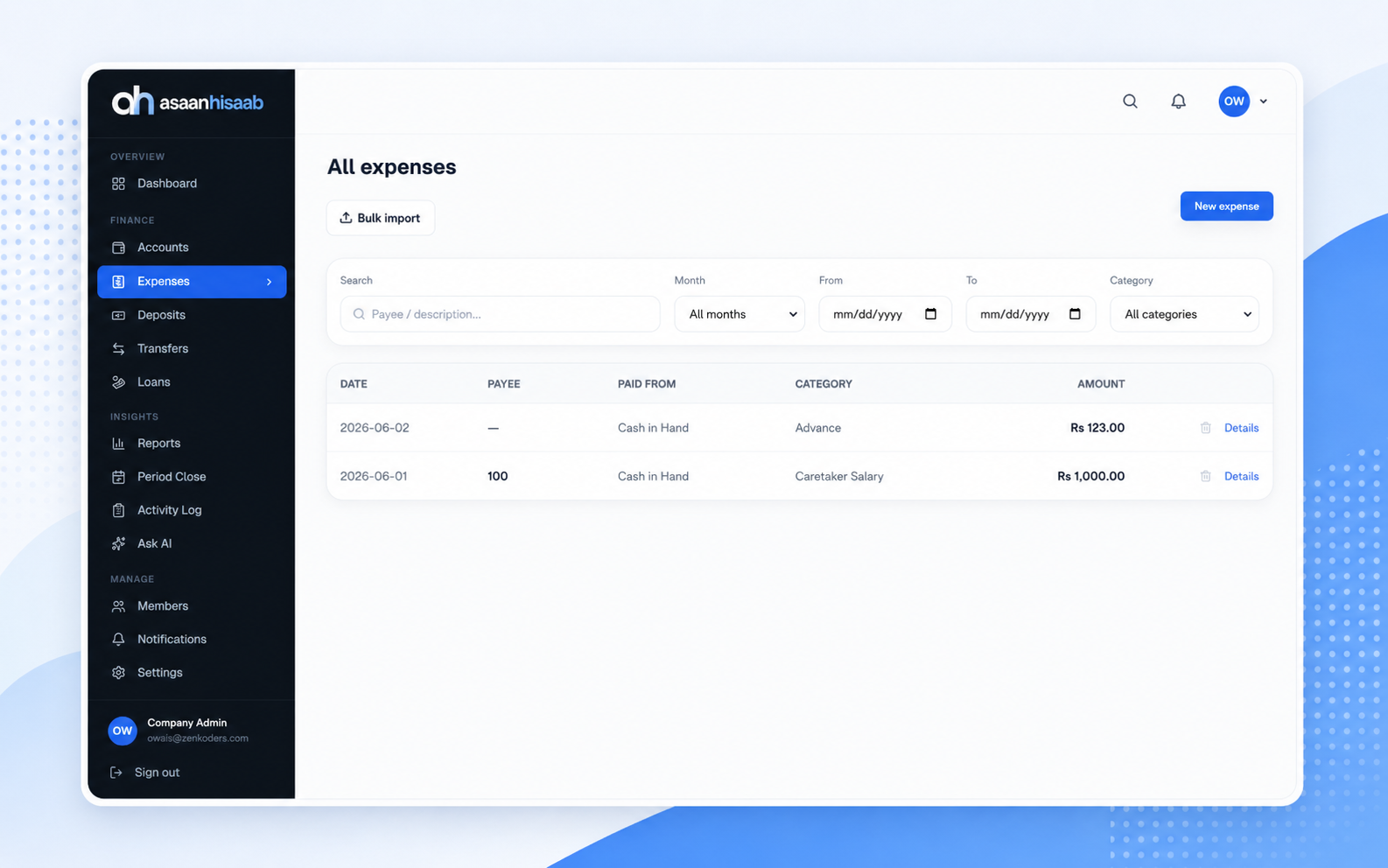
Log every expense with a category, payee, payment method, and receipt photo. Search and filter by month in seconds. The entire team can submit expenses — admins review and categorise them. No spreadsheet rows to maintain.

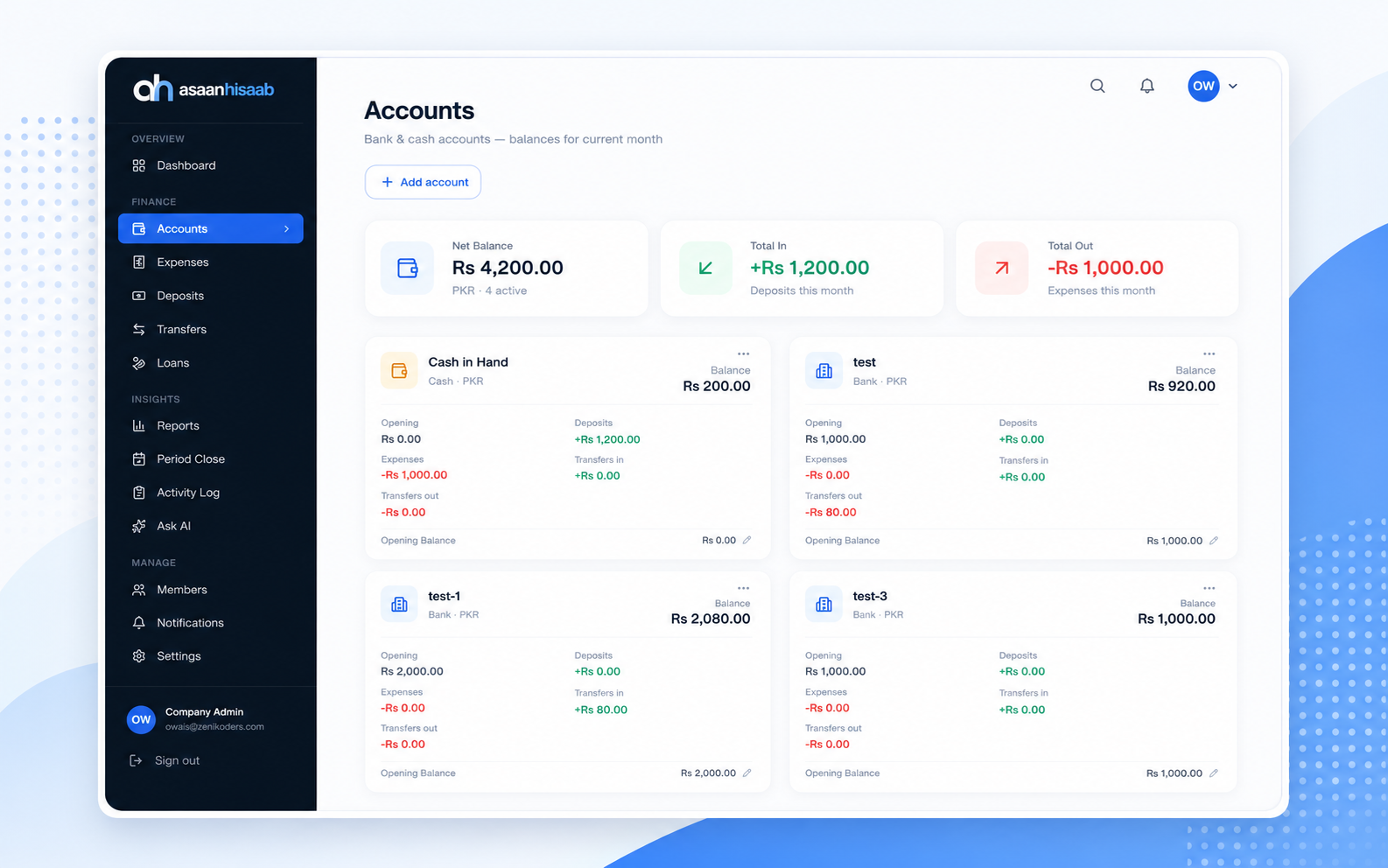
Track incoming funds and transfers between bank accounts and cash wallets. Every rupee is accounted for across all accounts. The running balance is always visible and always accurate.
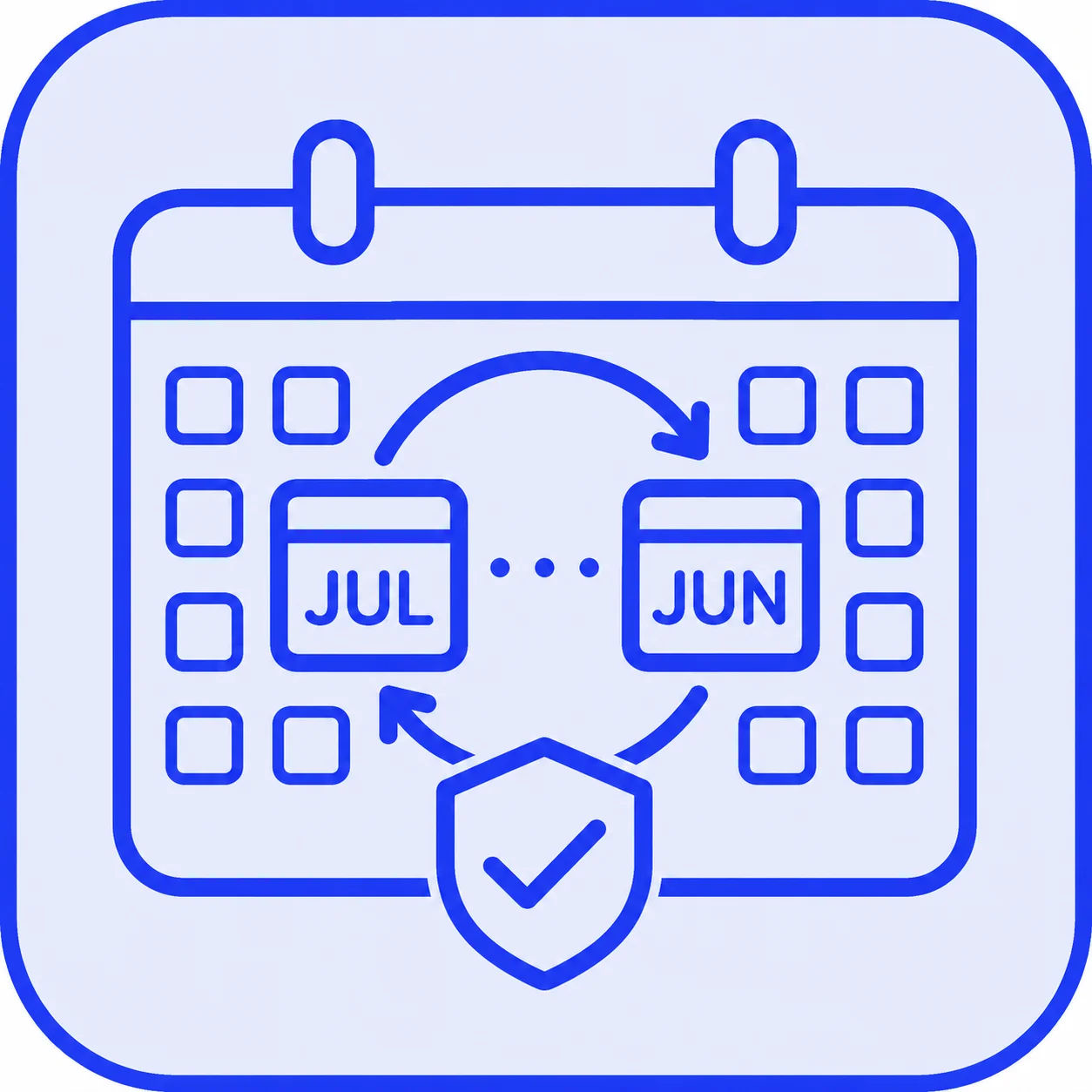
The fiscal year runs July to June — not January to December. Asaan Hisaab supports this natively. Monthly charts, category breakdowns, and running balances all reflect the actual fiscal structure Pakistani companies use. This is not a buried setting — it is a first-class configuration from day one.

Once a month is closed, it is closed. No accidental entries, no retroactive edits by team members. Every transaction, every change, every action is logged with a timestamp and the user who made it. Finance managers do not have to police their own books — the system enforces it.

Companies that deal in USD alongside PKR can set exchange rates on a month-by-month basis. All reports and totals convert automatically to the default currency. Historical reports use the exchange rate from the month of the transaction — not the current rate. No manual conversions, no formula errors.

Many Pakistani founders and finance managers run multiple entities. Asaan Hisaab supports multiple companies from a single account — each with its own accounts, books, users, and settings.

Employees can submit expenses and view their own records. Admins review, categorise, manage accounts, and close periods. The role structure maps directly to how finance teams in Pakistani SMEs actually work.
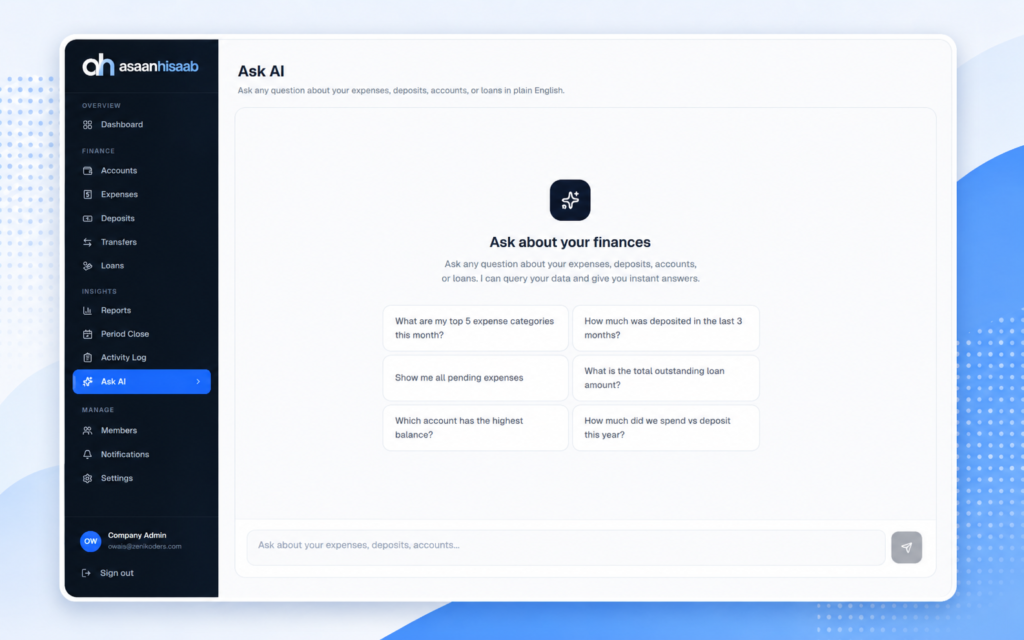
At asaanhisaab.com — free to get started, no credit card required
Pakistan fiscal year supported natively
With configurable per-month exchange rates
With period locking in production
Asaan Hisaab started as a tool we needed for Zenkoders. We were using spreadsheets and they were giving us the same problems every growing company faces — version conflicts, accidental edits to closed months, no audit trail, currency conversions done manually. We built what we needed and then made it available to other Pakistani companies.
The fiscal year logic was more complex than it sounds. A July-to-June fiscal year means month 7 of one calendar year connects to month 6 of the next. Every report, every chart, every period lock, every year-end balance calculation had to handle this correctly — including for multi-year date ranges and for months that span calendar year boundaries.
The multi-currency system with per-month exchange rates added another layer. Historical reports need to use the rate from the month of the transaction, not today’s rate. Getting this right across period-locked months, year-end reports, and multi-company accounts required careful data modeling from the start.
QuickBooks and Xero were built for Western markets. They do not natively support Pakistan’s July-to-June fiscal year, they require configuration workarounds for PKR as a base currency, and they are priced for larger organizations. Asaan Hisaab was built specifically for Pakistani SMEs — the fiscal year, currency, and workflows are designed around how Pakistani companies actually operate, not adapted from a Western product.
A product at this scope — multi-company, multi-currency, fiscal year configuration, period locking, audit trail, team roles, receipt uploads — typically takes 3 to 5 months for an experienced team. The complexity is in the financial logic: fiscal year calculations, exchange rate history, and audit-grade data integrity. The UI is the straightforward part.
Yes. Asaan Hisaab was built for our own needs first, which means we understand the domain deeply. If you need a finance tool tailored to your industry, currency requirements, or compliance needs — local or international — we can scope and build it. Book a call to discuss what your product needs.
Asaan Hisaab is a bookkeeping and expense management tool focused on internal financial management — tracking company money, closing monthly books, and generating financial reports. FBR invoicing and tax filing compliance is a separate layer that may be added in future. For current FBR compliance, companies use it alongside their existing tax workflow.