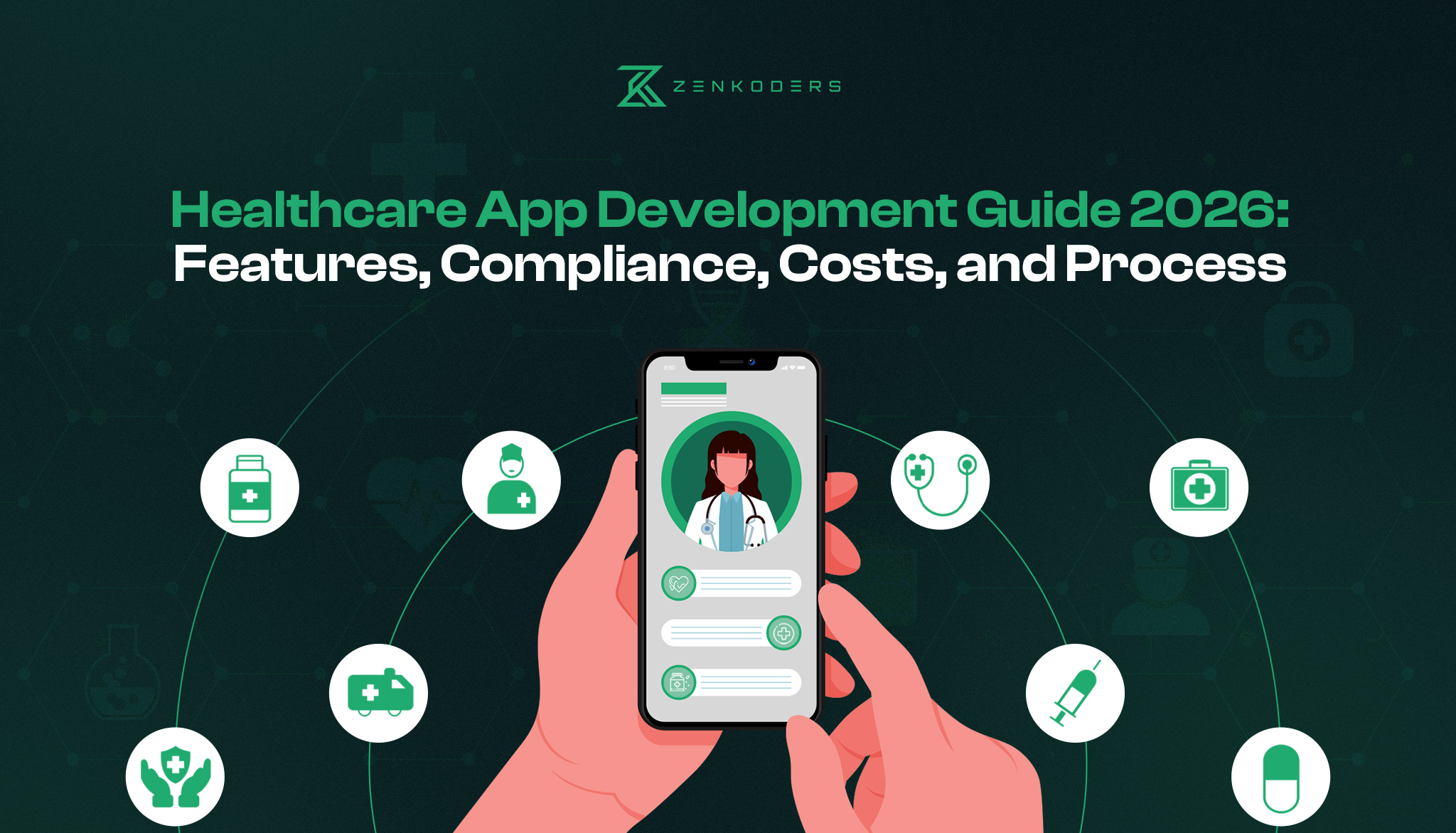

Healthcare applications can make care more accessible, help clinical teams manage information, and give patients greater control over their healthcare journeys. However, building a healthcare app is not the same as developing a conventional consumer product.
A healthcare application may process sensitive health information, connect with clinical systems, support decisions that affect patient care, or operate under healthcare and privacy regulations. Poor product decisions can therefore create more than usability problems. They can expose patient data, disrupt clinical workflows, increase regulatory risk, and weaken user trust.
Successful healthcare app development requires a coordinated approach to:
- product strategy;
- patient and clinical workflows;
- privacy and regulatory requirements;
- security architecture;
- accessibility;
- healthcare interoperability;
- software testing;
- long-term maintenance.
This guide explains how to plan and build a healthcare application in 2026, including common app types, essential features, compliance considerations, development stages, technology choices, timelines, and estimated costs.
Organizations that need technical support can also explore Zenkoders healthcare app development services for mobile, web, integration, and product-engineering requirements.
What Is Healthcare App Development?
Healthcare app development is the process of designing, building, testing, deploying, and maintaining software that supports patients, clinicians, administrators, payers, caregivers, or other participants in the healthcare ecosystem.
Healthcare software may include:
- patient portals;
- telehealth platforms;
- remote patient monitoring applications;
- medication-management tools;
- appointment-booking systems;
- clinical workflow applications;
- wellness and fitness products;
- healthcare-provider directories;
- mental-health applications;
- medical-device companion apps;
- electronic health record integrations;
- insurance and claims-management platforms.
Healthcare products may be delivered as mobile applications, browser-based platforms, provider dashboards, or connected software ecosystems. Businesses planning a patient-facing mobile product can review the available mobile app development options, while organizations building administrative portals or clinical dashboards may require custom web application development.
The technical and regulatory requirements vary significantly by product.
A wellness app that stores self-entered hydration data may have a different risk profile from an application that transmits patient records to a hospital, controls a connected medical device, or recommends changes to a treatment plan.
Before selecting a technology stack or estimating development costs, the product team must understand what the application does, whose data it handles, and how its output may affect users.
Why Healthcare Applications Require a Specialized Development Approach
Healthcare applications operate in a high-trust environment. Users need confidence that the product is secure, accurate, accessible, and suitable for its intended purpose.
A healthcare development team must account for challenges that may not exist in a standard mobile application.
Sensitive health information
Health information can reveal a person’s medical conditions, treatments, medications, reproductive health, mental-health history, location, and daily behaviors.
The development team should therefore apply data minimization from the beginning. Each collected data field should have a documented product, clinical, legal, or operational purpose.
Unnecessary data collection increases:
- breach exposure;
- regulatory scope;
- infrastructure requirements;
- deletion complexity;
- third-party risk;
- user mistrust.
Complex regulatory requirements
The rules that apply depend on the product, organization, users, data flows, business relationships, and markets in which the app operates.
Depending on the circumstances, a healthcare product may need to consider:
- HIPAA and the HITECH Act in the United States;
- the FTC Act and Health Breach Notification Rule;
- FDA oversight for certain medical software;
- GDPR in the European Economic Area;
- UK GDPR and applicable UK healthcare requirements;
- CCPA and CPRA in California;
- state-level consumer health-data laws;
- accessibility requirements;
- contractual security requirements;
- local telehealth and professional-practice rules.
Compliance should be evaluated during product discovery not added immediately before launch.
Multiple user groups
One healthcare platform may need separate experiences for:
- patients;
- physicians;
- nurses;
- administrators;
- caregivers;
- pharmacists;
- laboratory staff;
- insurance teams.
Each user group has different permissions, responsibilities, terminology, and accessibility needs. The app’s interface should be based on real user workflows rather than a single generic dashboard.
Healthcare companies can use professional UI/UX design and development services to map workflows, test prototypes, and create accessible interfaces for different user groups.
Clinical workflow impact
A technically functional feature may still fail if it slows clinicians down, generates excessive notifications, presents information without sufficient context, or does not fit existing processes.
Healthcare product design should involve actual users and relevant subject-matter experts from the beginning.
For example, a notification system may work correctly from a technical perspective but become harmful to productivity if it creates alert fatigue. Similarly, a patient dashboard may display accurate information but confuse users if medical terminology is presented without explanation.
Interoperability requirements
Healthcare applications often need to exchange information with:
- electronic health records;
- laboratories;
- pharmacies;
- payment systems;
- wearable devices;
- insurance platforms;
- medical equipment;
- scheduling systems.
Integrations can become one of the most expensive and unpredictable parts of a healthcare software project. External vendor approvals, inconsistent data formats, sandbox limitations, and legacy systems can all affect delivery.
Get a practical assessment of your product idea, including recommended features, technical architecture, integrations, estimated timeline, and development budget.
Types of Healthcare Applications
The right architecture, feature set, and compliance strategy depend heavily on the app category.
For a wider overview of industry platforms, read Zenkoders guide to the different types of medical software.
1. Telehealth applications
Telehealth platforms enable remote consultations through video, audio, messaging, or asynchronous communication.
Common telehealth features include:
- patient registration;
- provider search;
- appointment scheduling;
- secure video consultations;
- secure messaging;
- digital intake forms;
- payment processing;
- prescription workflows;
- clinical notes;
- post-appointment follow-ups.
Telehealth applications may also need provider licensing checks, location-aware workflows, emergency notices, informed consent, identity verification, and state-specific restrictions.
2. Patient portals
Patient portals give users access to healthcare information and services associated with a provider or healthcare organization.
Typical capabilities include:
- viewing appointments;
- accessing test results;
- reviewing clinical documents;
- paying bills;
- requesting prescription refills;
- messaging care teams;
- updating personal information;
- downloading or sharing records.
Because patient portals frequently connect to clinical systems, access controls, audit trails, data provenance, and interoperability become central requirements.
3. Remote patient monitoring applications
Remote patient monitoring products collect health information outside traditional clinical settings.
They may process data from:
- blood-pressure monitors;
- glucose meters;
- pulse oximeters;
- cardiac devices;
- weight scales;
- wearable sensors;
- patient-reported questionnaires.
A remote monitoring product must define what happens when data is missing, delayed, duplicated, outside expected ranges, or entered incorrectly.
Alert thresholds and escalation workflows should be designed with qualified clinical stakeholders. Developers should not independently determine which readings require medical intervention.
4. Medication-management applications
Medication apps can help users:
- manage medication schedules;
- record completed doses;
- receive reminders;
- request prescription refills;
- communicate with pharmacies;
- share adherence information with caregivers.
Advanced products may connect with pharmacies, clinicians, caregivers, or smart medication devices.
Teams should avoid presenting reminders or automated recommendations in ways that could be mistaken for individualized medical advice unless the product has been designed and reviewed for that purpose.
5. Mental-health applications
Mental-health products may support:
- therapy sessions;
- journaling;
- mood tracking;
- guided exercises;
- crisis-resource access;
- clinician communication;
- care-plan management.
These products need particularly careful privacy, safety, moderation, and escalation design. The product must clearly communicate what it can and cannot do.
A mental-health application should not present a general chatbot or automated response system as an emergency service unless it has been explicitly designed, staffed, and validated for that purpose.
6. Wellness and fitness applications
Wellness apps often focus on exercise, sleep, nutrition, mindfulness, stress management, or general lifestyle goals.
A wellness label does not eliminate privacy obligations. Consumer health information may still fall under privacy, breach-notification, advertising, or consumer-protection requirements.
7. Clinical workflow applications
Clinical applications help healthcare professionals perform or coordinate work.
They may include:
- documentation tools;
- clinical dashboards;
- task management;
- care-team communication;
- decision-support systems;
- referral workflows;
- patient-list management;
- bed or resource management.
These applications should be tested in realistic healthcare workflows, not only against technical requirements.
8. Medical-device software and companion apps
Some applications operate as part of, or in connection with, a medical device.
Depending on their intended use and functionality, these products may be subject to medical-device regulation.
Potential examples include software that:
- controls a connected device;
- displays device measurements;
- analyzes medical images;
- produces patient-specific clinical recommendations;
- calculates treatment-related values;
- monitors a serious medical condition.
Regulatory classification should be evaluated before development decisions become expensive or difficult to reverse.
9. Healthcare scheduling applications
Healthcare scheduling platforms help patients find providers, reserve appointments, receive reminders, reschedule visits, and join waiting lists.
More advanced platforms may use automated workflows or artificial intelligence to optimize provider availability. Read how AI is being used in healthcare appointment scheduling for additional product ideas and implementation considerations.
10. Healthcare chatbot applications
Healthcare chatbots can support administrative tasks such as:
- answering common questions;
- helping users find services;
- scheduling appointments;
- sending refill reminders;
- collecting preliminary information;
- directing users to human support.
Healthcare organizations considering conversational interfaces can explore common chatbot use cases for clinics and pharmacies.
Chatbots should not present unsupported diagnoses, treatment recommendations, or emergency guidance. Appropriate escalation to human support should be part of the workflow.
How to Determine Which Healthcare Regulations Apply
There is no universal healthcare-app compliance checklist that applies equally to every product.
A more reliable process begins with several questions:
- Who owns and operates the application?
- Who are its intended users?
- What information will it collect?
- Where does the information originate?
- Where will the information be stored?
- Which organizations receive or process the information?
- Does the app connect to a healthcare provider, health plan, or clearinghouse?
- Could the software influence diagnosis, prevention, monitoring, or treatment?
- In which countries and states will the product operate?
- Does the application use advertising, analytics, or tracking technologies?
- Does it connect with medical devices?
- Does it make clinical or medical claims?
The answers help legal, compliance, security, and regulatory specialists determine which requirements may apply.
Is Every Healthcare App Subject to HIPAA?
No.
HIPAA generally applies to covered entities and business associates handling protected health information.
Covered entities typically include certain:
- healthcare providers;
- health plans;
- healthcare clearinghouses.
A technology company may become a business associate when it creates, receives, maintains, or transmits protected health information on behalf of a covered entity while performing covered services.
A direct-to-consumer health application that is not operated for a covered entity may fall outside HIPAA. That does not mean it is unregulated.
FTC rules, state privacy laws, consumer-protection laws, contractual obligations, breach-notification rules, and other requirements may still apply.
Product teams should document their roles, business relationships, and data flows instead of using “HIPAA compliant” as a general marketing phrase.
HIPAA Considerations for Applicable Applications
When HIPAA applies, the organization may need to address the Privacy, Security, and Breach Notification Rules.
A healthcare software development program commonly considers:
- unique user identification;
- access controls;
- secure authentication;
- audit controls;
- transmission security;
- data-integrity controls;
- workforce access policies;
- organizational risk analysis;
- incident-response procedures;
- business associate agreements;
- backup and disaster recovery;
- vendor management;
- minimum-necessary access;
- breach assessment and notification.
HIPAA compliance is not achieved by adding encryption to an otherwise unmanaged application.
It requires:
- technical safeguards;
- documented administrative controls;
- operational processes;
- appropriate contracts;
- workforce policies;
- ongoing risk management.
A development company may implement technical controls, but the organization operating the product remains responsible for determining its legal and compliance obligations.
FTC and Consumer Health-App Requirements
A health application that falls outside HIPAA may still be covered by the Federal Trade Commission’s Health Breach Notification Rule.
Consumer health-app operators should carefully evaluate:
- privacy representations;
- consent mechanisms;
- advertising practices;
- analytics tools;
- tracking technologies;
- data sharing;
- third-party software development kits;
- deletion promises;
- security claims;
- breach-response procedures.
A privacy policy should accurately describe the product’s actual data practices. Copying a generic privacy policy from another application creates legal, operational, and reputational risk.
FDA Considerations for Healthcare Software
Some healthcare software may be regulated as a medical device based on its intended use and functionality.
Potentially relevant functions may include software that:
- analyzes medical images;
- controls a medical device;
- provides patient-specific diagnostic output;
- recommends treatment;
- performs clinically significant calculations;
- monitors a condition in a way that creates patient risk.
Not every health-related function is regulated as a medical device. Product teams should obtain appropriate regulatory guidance early, particularly when product outputs may affect clinical decisions.
Marketing statements are also important. Claims made on a website, app-store listing, product interface, or sales document may help establish the product’s intended use.
Essential Healthcare App Features
Feature selection should follow user needs, workflow requirements, and risk—not generic competitor checklists.
Secure registration and authentication
Depending on the product, users may need:
- secure registration;
- email or phone verification;
- identity verification;
- multi-factor authentication;
- password recovery;
- biometric login;
- consent capture;
- session management;
- account deletion;
- trusted-device management.
Authentication friction should reflect the sensitivity of the information and the risk associated with unauthorized access.
Role-based access control
Healthcare applications often require different permissions for patients, providers, administrators, caregivers, and support teams.
Role-based access should define:
- which records each user can view;
- which records each user can modify;
- which actions each role can perform;
- whether access is temporary or persistent;
- how emergency access is handled;
- how permission changes are logged;
- how terminated accounts are removed.
Permissions must be enforced at the API and database layers. Hiding a button in the user interface is not a security control.
Appointment scheduling
Scheduling functionality may include:
- provider availability;
- appointment types;
- location selection;
- time-zone handling;
- intake forms;
- reminders;
- cancellations;
- rescheduling;
- waiting lists;
- payment collection;
- calendar synchronization.
The system should prevent duplicate bookings and define what happens when provider availability changes after an appointment has been reserved.
Secure communication
Communication features may include:
- direct messaging;
- care-team messaging;
- image or document uploads;
- automated reminders;
- video consultations;
- post-visit instructions.
The product should define:
- message retention;
- access permissions;
- notification behavior;
- response expectations;
- emergency-use limitations;
- escalation procedures.
Health-record access
Apps that display clinical information must present data clearly and with sufficient context.
Important considerations include:
- medical terminology;
- abnormal-result presentation;
- document versioning;
- result-release timing;
- data provenance;
- correction requests;
- downloading and sharing;
- accessibility;
- explanatory content.
Notifications
Notifications can improve engagement, but they may expose sensitive information on locked devices.
Give users control over:
- notification categories;
- delivery channels;
- preview content;
- frequency;
- quiet hours;
- preferred language.
Avoid placing diagnoses, medication names, test results, or other sensitive information in notification previews unless explicitly required and appropriately controlled.
Payments and insurance
Financial features may include:
- card payments;
- invoices;
- insurance information;
- copay collection;
- subscription management;
- refunds;
- receipts;
- claim-status tracking.
Payment information should be handled through appropriate payment providers and should not be stored unnecessarily.
Administrative dashboards
Healthcare platforms commonly require an administrative interface for:
- user management;
- permission management;
- provider management;
- scheduling;
- content management;
- reporting;
- audit review;
- support workflows;
- system configuration.
A browser-based dashboard may be developed as part of a broader custom web application connected to the patient-facing mobile product.
Accessibility features
Healthcare products should be usable by people with different visual, auditory, motor, cognitive, and language needs.
Accessibility work may include:
- sufficient color contrast;
- scalable text;
- screen-reader compatibility;
- keyboard navigation;
- descriptive form labels;
- captions and transcripts;
- understandable error messages;
- plain-language content;
- large touch targets;
- reduced-motion support;
- multilingual content.
Accessibility should be built into product strategy, design, development, and testing rather than addressed immediately before launch.
Unsure Which Requirements Apply to Your Healthcare Product?
We can help you map your app’s users, data flows, integrations, and technical risks before development begins.
Security Requirements for Healthcare Applications
Security must be incorporated throughout the software-development lifecycle.
Data minimization
Collect only the information required to deliver the product’s intended function.
Document:
- why each sensitive field is required;
- who can access it;
- where it is stored;
- how long it is retained;
- whether it is shared;
- how it can be deleted.
Encryption
Sensitive information should generally be protected during transmission and storage using appropriate, current cryptographic controls.
Encryption decisions should address:
- databases;
- backups;
- object storage;
- mobile-device storage;
- logs;
- exported files;
- integration traffic;
- secrets;
- encryption keys.
Key management matters as much as the selected encryption algorithm.
Secure API design
Healthcare applications frequently rely on APIs to connect mobile clients, web interfaces, internal services, and external platforms.
API controls should address:
- authentication;
- authorization;
- rate limiting;
- input validation;
- object-level access;
- replay protection;
- logging;
- versioning;
- error handling;
- abuse monitoring.
Never assume a request is authorized simply because it originates from the official mobile app.
Audit logging
Audit logs may need to record:
- successful login attempts;
- unsuccessful login attempts;
- record access;
- record changes;
- permission updates;
- exports;
- administrative actions;
- integration events;
- security-related configuration changes.
Logs should be protected against unauthorized modification and should avoid capturing unnecessary sensitive information.
Secure software-development lifecycle
A mature healthcare development process may include:
- documented security requirements;
- architecture threat modeling;
- secure coding standards;
- peer code review;
- dependency scanning;
- static analysis;
- dynamic testing;
- penetration testing;
- secrets scanning;
- infrastructure review;
- release approvals;
- vulnerability management.
Security testing must continue after launch as software dependencies, attack methods, and product functionality change.
Third-party vendor management
A healthcare application may share information with:
- cloud providers;
- communication vendors;
- analytics platforms;
- payment processors;
- customer-support systems;
- integration providers;
- crash-reporting tools.
Before using a vendor, evaluate:
- what data it receives;
- why it needs that data;
- where it processes data;
- how long data is retained;
- how deletion works;
- which security controls are available;
- whether subcontractors are involved;
- how incidents are reported;
- which contractual terms are required.
A widely used vendor is not automatically appropriate for a healthcare workflow.
Turn Your Healthcare App Idea Into a Clear MVP
Define the essential features, user roles, workflows, and integrations needed for a focused first release.
Healthcare Interoperability: FHIR, HL7, and EHR Integrations
Interoperability allows healthcare applications to exchange information with other systems.
HL7
HL7 refers to a family of standards used for healthcare-data exchange.
Many established healthcare environments use HL7 v2 messages for events such as:
- admissions;
- discharges;
- transfers;
- laboratory orders;
- laboratory results;
- appointment information.
FHIR
FHIR stands for Fast Healthcare Interoperability Resources. It uses modular resources and modern web technologies to support healthcare-data exchange.
FHIR integrations may involve resources such as:
- Patient;
- Practitioner;
- Appointment;
- Observation;
- Condition;
- MedicationRequest;
- DiagnosticReport;
- Encounter.
Supporting FHIR does not guarantee that every healthcare system will integrate in the same way.
Implementations may vary according to:
- EHR vendor;
- FHIR version;
- implementation profile;
- available resources;
- supported fields;
- authorization method;
- organizational workflow.
EHR integration planning
Before estimating an EHR integration, identify:
- the EHR vendor;
- supported interface;
- available sandbox;
- required resources;
- required read operations;
- required write operations;
- authentication process;
- approval requirements;
- data-mapping needs;
- error-handling workflow;
- transaction volume;
- support ownership.
Integrations should be estimated separately from the core application because external approvals and vendor limitations can affect the delivery schedule.
Healthcare App Development Process
Step 1: Define the intended use
Start with a precise product statement.
Document:
- who the product serves;
- what problem it solves;
- which actions users can take;
- which outcomes the product supports;
- what the product does not do;
- whether it influences clinical decisions.
The intended use affects product scope, risk, regulatory analysis, validation, and marketing claims.
Step 2: Map users and workflows
Interview actual users and observe existing workflows where possible.
Create workflow maps for:
- primary tasks;
- exceptions;
- handoffs;
- approvals;
- alerts;
- failures;
- emergencies;
- support requests.
Include clinicians, administrators, patients, security specialists, and compliance stakeholders as appropriate.
Step 3: Map the data lifecycle
Document the complete data flow:
- Data collection
- Transmission
- Processing
- Storage
- Access
- Sharing
- Export
- Retention
- Deletion
Identify every internal and external system that receives sensitive information.
This data map can inform:
- system architecture;
- privacy notices;
- vendor agreements;
- security testing;
- access policies;
- incident response.
Step 4: Perform regulatory and risk analysis
Before full development, determine:
- potentially applicable laws;
- organizational roles;
- data classifications;
- medical-device considerations;
- required contracts;
- security requirements;
- validation requirements;
- retention obligations;
- incident-notification procedures.
Document decisions, assumptions, and unresolved questions.
Step 5: Prioritize the healthcare MVP
A healthcare minimum viable product should be limited in scope, not limited in safety.
Separate features into:
- required for the primary workflow;
- required for security, privacy, or compliance;
- valuable after initial validation;
- optional future enhancements.
Do not postpone authentication, access control, audit logging, consent, security testing, or recovery planning simply because the first release is called an MVP.
For further product-planning guidance, read about the importance of an MVP in mobile app development.
Step 6: Create and test the prototype
Build an interactive prototype before committing to full implementation.
Test:
- navigation;
- terminology;
- form completion;
- error recovery;
- appointment flows;
- notification preferences;
- accessibility;
- provider workflows;
- understanding of sensitive information.
Healthcare usability testing should include representative users, not only internal employees.
Zenkoders UI/UX design team can support user-flow planning, wireframing, prototyping, and interface design.
Step 7: Design the technical architecture
Architecture decisions should account for:
- expected user numbers;
- data sensitivity;
- availability requirements;
- external integrations;
- auditability;
- geographic requirements;
- recovery objectives;
- scalability;
- deployment frequency;
- support model.
Avoid unnecessary complexity.
A modular monolith may be more appropriate than microservices for an early-stage healthcare product. Large platforms with independent business domains and multiple engineering teams may benefit from service-based architecture.
Step 8: Select the technology stack
Choose technologies based on:
- functionality;
- team capability;
- security requirements;
- platform support;
- integrations;
- performance requirements;
- maintenance expectations.
The framework should follow the product requirements—not the other way around.
Step 9: Develop in controlled increments
Use short development cycles with:
- defined acceptance criteria;
- code review;
- automated testing;
- security checks;
- stakeholder demonstrations;
- documented technical decisions.
Prioritize complete user workflows over disconnected feature output.
Step 10: Test the healthcare application
Healthcare-app testing may include:
- functional testing;
- integration testing;
- API testing;
- security testing;
- accessibility testing;
- performance testing;
- device testing;
- browser testing;
- data-migration testing;
- backup and recovery testing;
- usability testing;
- clinical workflow validation;
- user-acceptance testing.
Test negative scenarios, including:
- incorrect inputs;
- denied permissions;
- network loss;
- delayed integrations;
- unavailable services;
- duplicate records;
- expired sessions;
- failed notifications;
- interrupted payments.
Step 11: Prepare for launch
A healthcare app launch plan should include:
- production-readiness review;
- incident-response procedures;
- support ownership;
- monitoring and alerts;
- backup validation;
- security contact details;
- privacy documentation;
- app-store requirements;
- user training;
- rollback plan;
- escalation paths.
Step 12: Monitor and improve
Healthcare software requires ongoing maintenance.
Post-launch work includes:
- security updates;
- dependency updates;
- operating-system support;
- infrastructure monitoring;
- vulnerability remediation;
- user feedback analysis;
- accessibility improvements;
- integration maintenance;
- audit review;
- policy updates;
- regulatory reassessment.
Compliance and security are ongoing operating responsibilities, not one-time launch tasks.
Recommended Healthcare App Technology Stack
The best technology stack depends on the product’s requirements, integrations, risk profile, and development team.
Native mobile app development
Native development can provide strong performance, platform integration, accessibility support, and access to device capabilities.
Common native technologies include:
- Swift for iOS;
- Kotlin for Android.
Native development may be suitable for applications that require:
- complex Bluetooth integrations;
- intensive background processing;
- advanced device capabilities;
- high-performance graphics;
- deep operating-system integration.
Cross-platform app development
Cross-platform frameworks can reduce duplicated effort when the iOS and Android experiences are similar.
Common options include:
- React Native;
- Flutter.
Organizations considering a shared mobile codebase can compare React Native and Flutter before selecting a framework.
Zenkoders also provides dedicated React Native app development services for products that require cross-platform mobile delivery.
Cross-platform development does not automatically reduce the total project cost. Native integrations, accessibility, testing, application security, and long-term maintenance still require careful planning.
Web application development
Healthcare providers, administrators, and support teams may use browser-based dashboards.
Common frontend technologies include:
- React;
- Next.js;
- Angular;
- Vue.
A healthcare web platform should prioritize:
- accessibility;
- browser compatibility;
- secure authentication;
- role-based permissions;
- responsive design;
- session security.
Backend development
Healthcare backends are commonly developed with:
- Node.js and TypeScript;
- .NET;
- Java and Spring;
- Python;
- Go.
The backend should support:
- secure authorization;
- data validation;
- auditability;
- reliable integrations;
- monitored background jobs;
- controlled deployment.
Database technologies
Depending on the data model, applications may use:
- PostgreSQL;
- Microsoft SQL Server;
- MySQL;
- approved document databases;
- specialized analytical storage.
Database selection should consider:
- consistency;
- auditing;
- encryption;
- backup;
- recovery;
- reporting;
- data relationships.
Cloud infrastructure
Major cloud platforms provide services that can support healthcare workloads.
However, using an eligible cloud service does not make an application compliant automatically.
The organization must:
- select appropriate services;
- configure them securely;
- establish required agreements;
- control permissions;
- monitor the environment;
- document operational procedures.
Artificial Intelligence in Healthcare Applications
Artificial intelligence can support healthcare workflows, but it should be introduced for a clearly defined purpose rather than as a marketing feature.
Possible use cases include:
- appointment optimization;
- administrative automation;
- document classification;
- patient-message routing;
- operational forecasting;
- clinical-document summarization;
- anomaly detection;
- user-support workflows.
Organizations can read more about the broader impact of artificial intelligence across industries, including emerging healthcare use cases.
Before implementing AI in a healthcare product, evaluate:
- training-data quality;
- model bias;
- explainability;
- privacy;
- human oversight;
- output accuracy;
- failure behavior;
- monitoring;
- regulatory implications;
- model updates.
AI-generated output should be clearly identified where appropriate. High-impact outputs should include suitable human review and escalation.
How Long Does Healthcare App Development Take?
A healthcare application may take several months to more than a year depending on:
- product scope;
- number of user roles;
- privacy and compliance requirements;
- external integrations;
- supported platforms;
- medical-device considerations;
- validation needs;
- design complexity;
- stakeholder availability;
- external approvals.
Illustrative timelines include:
Product scope | Typical timeline |
Discovery and clickable prototype | 4–8 weeks |
Focused non-clinical MVP | 3–6 months |
Healthcare MVP with sensitive-data workflows | 5–9 months |
Product with EHR or device integrations | 8–14 months |
Enterprise or regulated clinical platform | 12–24+ months |
These are planning estimates, not fixed commitments.
A reliable timeline requires:
- a documented feature list;
- defined user roles;
- integration requirements;
- supported platforms;
- acceptance criteria;
- stakeholder availability.
How Much Does Healthcare App Development Cost?
Healthcare app development cost depends on far more than the number of screens.
Major cost factors include:
- product discovery;
- user research;
- UI/UX design;
- mobile and web platforms;
- backend complexity;
- number of user roles;
- security controls;
- compliance-related work;
- EHR integrations;
- connected-device integrations;
- video communication;
- data migration;
- accessibility;
- quality assurance;
- cloud infrastructure;
- ongoing support.
Illustrative project ranges include:
Product scope | Estimated development range |
Product discovery and prototype | $10,000–$35,000 |
Focused wellness or administrative MVP | $40,000–$90,000 |
Healthcare MVP with secure data workflows | $90,000–$180,000 |
Advanced product with integrations | $180,000–$350,000 |
Enterprise or regulated platform | $350,000–$750,000+ |
Actual pricing depends on location, team structure, hourly rates, project scope, integrations, and required validation.
Ask any development partner to specify:
- included platforms;
- assumed user roles;
- included integrations;
- security work;
- quality-assurance scope;
- infrastructure costs;
- third-party fees;
- project-management costs;
- post-launch support;
- exclusions.
A low estimate that excludes security, integrations, testing, infrastructure, and maintenance is not a meaningful comparison.
Common Healthcare App Development Mistakes
Treating compliance as a final checklist
Privacy, security, and regulatory requirements can affect the entire product architecture. Late changes are expensive and may delay launch.
Collecting unnecessary information
More data does not automatically make a product more valuable. It creates additional risk and operational responsibility.
Designing without representative users
Assumptions about clinical and patient workflows frequently produce avoidable usability problems.
Making unsupported medical claims
Marketing language should accurately represent what the product does.
Claims about diagnosis, treatment, prevention, outcomes, or clinical accuracy may create regulatory and trust concerns.
Overloading the first release
A large feature list increases cost without proving that users will adopt the core workflow.
Underestimating integrations
EHR, pharmacy, laboratory, device, and insurance integrations often require:
- vendor coordination;
- field mapping;
- testing;
- approval processes;
- ongoing maintenance.
Using tracking tools without reviewing data flows
Analytics tools, advertising pixels, session-replay platforms, crash-reporting systems, and support widgets may receive sensitive information.
Review every third-party tool before implementation.
Ignoring post-launch operations
A production healthcare product needs:
- monitoring;
- incident response;
- vulnerability management;
- backups;
- technical support;
- regular updates;
- integration maintenance.
How to Choose a Healthcare App Development Company
Evaluate potential partners based on verifiable evidence rather than generic claims.
Have they worked with similar workflows?
Relevant experience should reflect the type of users, data, integrations, and operational environment involved in your project.
Review the company’s software development portfolio and request examples related to your proposed product.
How do they evaluate compliance requirements?
A credible development partner should explain the boundaries of its role and recommend qualified legal or regulatory review where needed.
Avoid companies that promise universal HIPAA or FDA compliance without first understanding the product.
How is security integrated into development?
Look for a defined process that includes:
- threat modeling;
- code review;
- dependency management;
- access-control testing;
- security testing;
- remediation.
Can the company explain its architecture decisions?
The development team should be able to explain technical trade-offs in understandable language.
How does it approach healthcare integrations?
Ask for examples involving:
- FHIR;
- HL7;
- EHR platforms;
- laboratories;
- connected devices;
- other relevant systems.
What happens after launch?
Clarify:
- application monitoring;
- maintenance;
- incident response;
- support availability;
- ownership;
- service expectations;
- update procedures.
Can it provide verifiable evidence?
Request:
- relevant case studies;
- client references;
- project outcomes;
- team credentials;
- security documentation;
- certifications where applicable;
- examples of comparable work.
For additional company information, review About Zenkoders and its software-development experience.
Healthcare App Development Checklist
Before development, confirm that your team has:
- defined the intended use;
- identified target users;
- mapped core workflows;
- classified collected data;
- documented the data lifecycle;
- evaluated potentially applicable regulations;
- reviewed medical-device implications;
- identified required third-party agreements;
- prioritized the MVP;
- defined accessibility requirements;
- selected integration targets;
- created security requirements;
- planned product testing;
- defined launch ownership;
- estimated post-launch maintenance.
How Zenkoders Approaches Healthcare App Development
Zenkoders helps organizations plan, design, and develop healthcare software based on the product’s users, workflows, data, integrations, and business goals.
A typical engagement may include:
- product discovery;
- requirements documentation;
- UX and UI design;
- technical architecture;
- mobile application development;
- web application development;
- backend development;
- healthcare-system integrations;
- cloud implementation;
- quality assurance;
- security-focused engineering;
- deployment;
- ongoing maintenance.
Before proposing a solution, the team works to understand:
- who will use the product;
- what information it will handle;
- which healthcare workflows it supports;
- which systems it must connect with;
- which risks and constraints must be addressed;
- how product success will be measured.
Organizations can review Zenkoders complete custom software development services or discuss a healthcare project directly through the Zenkoders contact page.
Planning a healthcare application?
Request a healthcare product assessment to discuss your intended users, essential features, integrations, likely timeline, and development budget.
Tell Us About Your Healthcare App
Share your product idea, target users, required features, integrations, and expected launch timeline.
FAQs:
What is healthcare app development?
Healthcare app development is the process of designing, building, testing, deploying, and maintaining software for patients, healthcare professionals, administrators, payers, caregivers, and other healthcare users.
Does every healthcare app need to comply with HIPAA?
No. HIPAA generally applies to covered entities and business associates handling protected health information.
Other healthcare and wellness applications may still be subject to FTC rules, state privacy laws, GDPR, consumer-protection requirements, contractual obligations, or other regulations.
What features should a healthcare MVP include?
The feature set depends on the intended workflow.
A typical healthcare MVP may include:
- secure authentication;
- user profiles;
- role-based access;
- the primary patient or provider workflow;
- notifications;
- consent handling;
- audit logging;
- administrative controls;
- required integrations.
How long does it take to build a healthcare application?
A focused MVP may take approximately three to nine months.
Products with complex integrations, several user groups, clinical validation, connected devices, or medical-device requirements can take 12 months or longer.
How much does healthcare app development cost?
A focused application may cost approximately $40,000–$90,000, while secure healthcare platforms with integrations commonly require $90,000–$350,000 or more.
Enterprise and regulated systems can exceed these ranges.
Can healthcare apps use artificial intelligence?
Yes, but AI should be used for a clearly defined purpose.
Teams must evaluate:
- data quality;
- bias;
- explainability;
- privacy;
- human oversight;
- clinical risk;
- monitoring;
- regulatory requirements.
What is FHIR?
FHIR stands for Fast Healthcare Interoperability Resources.
It is a standard developed by HL7 for exchanging healthcare information through structured resources and modern web technologies.
Is cloud hosting suitable for healthcare applications?
Cloud infrastructure can support healthcare applications when the organization selects appropriate services, configures them securely, establishes required agreements, controls access, and operates them according to applicable requirements.
What security testing does a healthcare application need?
Security testing may include:
- architecture review;
- threat modeling;
- static analysis;
- dependency scanning;
- API testing;
- access-control testing;
- penetration testing;
- infrastructure review;
- incident-response validation.
Should a healthcare app use native or cross-platform development?
The decision depends on performance, integrations, device functionality, team skills, timeline, and maintenance requirements.
Native development may be more suitable for products requiring advanced device capabilities. React Native or Flutter may be suitable when iOS and Android applications share similar features and workflows.