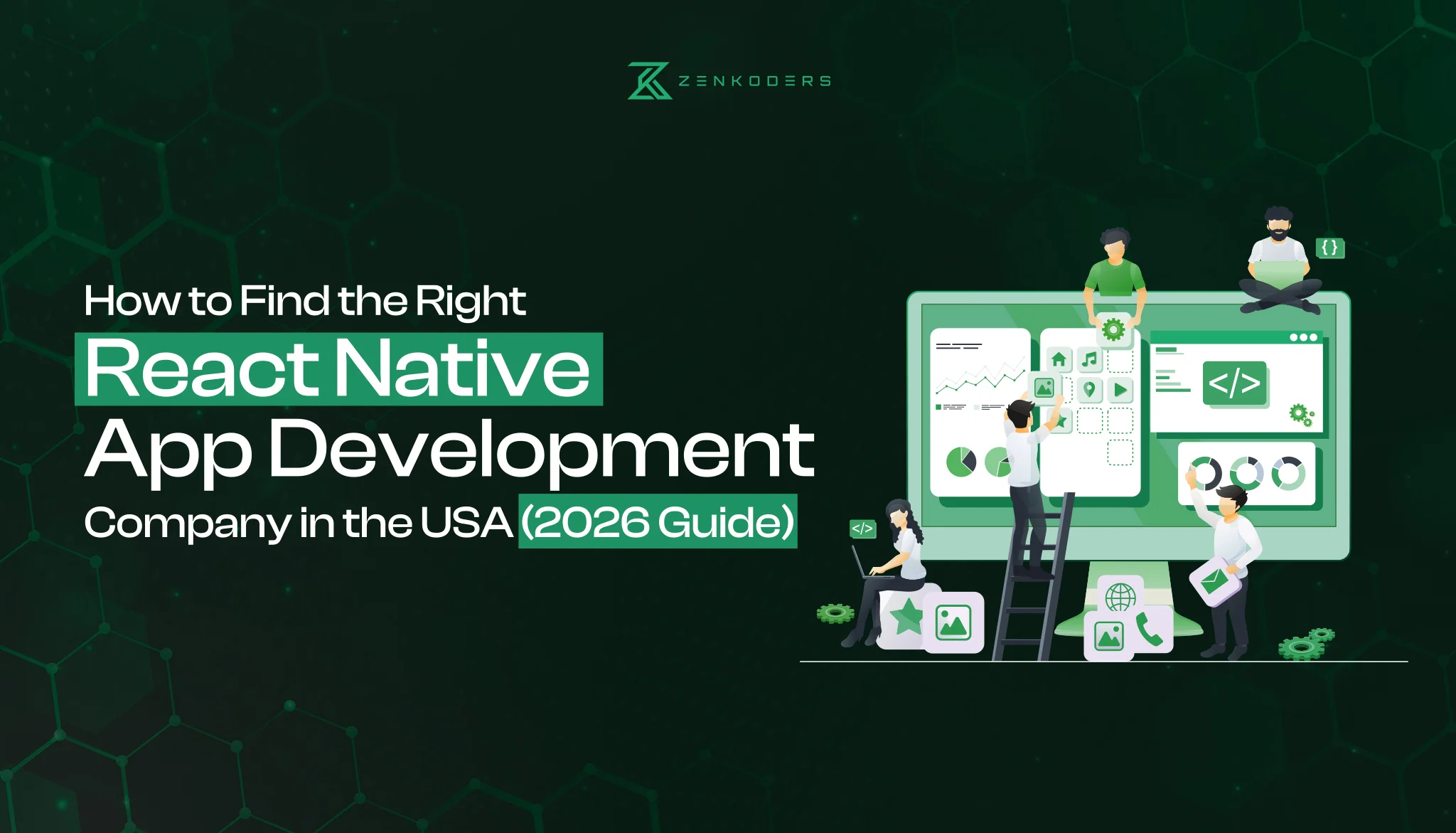

Every business in the United States wants a mobile app but very few can afford to build two separate apps for iOS and Android from scratch. Native development is expensive, slow, and requires two different engineering teams. That’s the problem. The solution? Partnering with a react native app development company that builds one high-performance app that runs beautifully on both platforms, cutting your cost and time-to-market almost in half. In this guide, we’ll break down everything you need to know about react native app development services, how to choose the right partner, and how to avoid the mistakes that sink most app projects.
What Is a React Native App Development Company?
Let’s keep it simple.
React Native is an open-source framework originally created by Meta (Facebook). It lets developers write code once in JavaScript or TypeScript and deploy it as a real, fully functional app on both iOS and Android. No shortcuts, no watered-down web wrappers. Apps like Instagram, Shopify, and Discord use React Native in production.
A react native app development company is a specialized agency that uses this framework to design, build, test, and launch mobile apps for businesses. Instead of hiring in-house mobile app developers for each platform, you work with one team that handles everything: UI/UX design, cross-platform development, API integration, quality assurance, App Store and Google Play submission, and ongoing app maintenance.
Think of it like hiring one bilingual expert instead of two translators faster, cheaper, and everything stays consistent.
Share your idea with Zenkoders and get a free roadmap, timeline, and cost estimate no obligation, no pressure. Your first consultation is 100% free.
Why React Native App Development Services Matter (Real Pain Points Solved)
Here’s what businesses actually struggle with and how the right partner fixes it:
Pain Point 1: Double development cost. Building separate native apps in Swift (iOS) and Kotlin (Android) can double your budget. React Native uses a single shared codebase, typically reducing development cost by 30–45%.
Pain Point 2: Slow time-to-market. Startups can’t wait 12 months to launch. With reusable components and tools like Expo, an MVP (minimum viable product) can go live in 8–14 weeks.
Pain Point 3: Inconsistent user experience. Two separate teams often produce two slightly different apps. One codebase means one consistent user experience across devices.
Pain Point 4: Maintenance headaches. Every bug fix in native development must be done twice. With React Native, you fix it once and push updates to both platforms.
Real-life use cases: A US-based food delivery startup launching on both app stores simultaneously. A healthcare provider building a HIPAA-compliant patient portal. An eCommerce brand converting its Shopify store into a mobile shopping app. A fintech company shipping a secure digital wallet with biometric login.
Key Features of Professional React Native App Development Services
What you’re really buying isn’t features — it’s outcomes. Here’s how they connect:
- Single codebase architecture → Lower cost, faster updates, and easier scaling as your business grows.
- Near-native performance → Smooth animations and fast load times that keep users engaged, thanks to the new React Native architecture (Fabric and TurboModules).
- Custom native modules → When you need device-level features (camera, GPS, Bluetooth, push notifications), experienced teams write native code bridges so nothing is off-limits.
- UI/UX design services → Interfaces that follow Apple’s Human Interface Guidelines and Google’s Material Design, so your app feels “at home” on every device.
- Third-party API integration → Payment gateways like Stripe, Firebase analytics, CRM systems, and cloud services connected seamlessly.
- Agile development process → You see progress in two-week sprints instead of waiting months for a “big reveal.”
- Dedicated quality assurance → Automated and manual testing across real devices before every release.
- Post-launch app maintenance → Ongoing updates, OS compatibility fixes, and performance monitoring after launch.
Types of React Native App Development Companies
Not all agencies are built the same. Here’s how the market breaks down:
1. Full-Cycle Development Agencies
They handle everything: discovery, product strategy, design, development, QA, launch, and maintenance. Best for businesses that want one accountable partner.
2. Staff Augmentation Providers
They rent you React Native developers who join your existing team. Best if you already have a CTO or product manager in-house.
3. MVP & Startup-Focused Studios
Lean teams specializing in fast, budget-friendly MVP launches for startups seeking funding or early traction.
4. Enterprise React Native Partners
Large firms serving Fortune 500 clients with complex requirements security compliance, legacy system integration, and multi-app ecosystems.
5. Offshore / Hybrid Delivery Teams
US-based project management combined with global engineering talent a popular model that balances communication quality with cost efficiency.
Comparison Table: React Native vs Other Development Approaches
Feature | React Native | Native (Swift/Kotlin) | Flutter | Hybrid (Web Wrappers) |
Codebase | Single | Two separate | Single | Single |
Language | JavaScript / TypeScript | Swift & Kotlin | Dart | HTML/JS |
Performance | Near-native | Best | Near-native | Weakest |
Development cost | Low–Medium | High | Low–Medium | Lowest |
Time-to-market | Fast | Slow | Fast | Fastest |
Developer availability (US) | Very high | Medium | Growing | High |
Best for | Most business apps | Heavy 3D/AR apps | Custom UI apps | Simple content apps |
Engagement Model Comparison
Model | Best For | Typical US Cost | Control Level |
Fixed-price project | Defined MVP scope | $25K–$80K | Low |
Dedicated team | Long-term products | $8K–$20K/dev/month | High |
Time & material | Evolving requirements | Hourly ($50–$150) | Medium |
Pros and Cons of Hiring a React Native App Development Company
Pros | Cons |
30–45% lower cost vs native | Slightly behind native for heavy 3D/gaming apps |
One team, one codebase, one timeline | Some device features need custom native modules |
Huge JavaScript talent pool | Framework updates require periodic upgrades |
Faster iteration and A/B testing | Quality varies widely between agencies |
Easier long-term maintenance | Requires careful architecture for large apps |
Every project is different. Send Zenkoders your app idea and get a personalized cost estimate and timeline within 24 hours completely free.
How to Choose the Right React Native App Development Company (Checklist)
Follow this step-by-step decision guide:
- Check the portfolio. Ask for live apps on the App Store and Google Play not just mockups. Download them. Test them.
- Verify React Native depth. Ask how they handle native modules, the new architecture, and performance optimization. Vague answers = red flag.
- Read verified reviews. Check Clutch, GoodFirms, and Google reviews from real US clients.
- Evaluate communication. Do they offer overlapping working hours with US time zones? A dedicated project manager?
- Ask about process. A mature partner follows agile development with sprint demos, not “we’ll show you in 3 months.”
- Discuss ownership. You should own 100% of the source code and intellectual property. Get it in writing.
- Compare maintenance plans. Launch is the beginning, not the end. Confirm post-launch support terms.
- Request a discovery call. The right team asks about your business goals before talking tech stack.
Best Use Cases: Who Should Hire a React Native App Development Company?
Let’s define the target audience in detail:
Startups & Founders You need an MVP fast to validate your idea or pitch investors. React Native gets you on both platforms with one budget.
Small & Medium Businesses (SMBs) Restaurants, salons, gyms, retail stores, and local service businesses that want booking, loyalty, or ordering apps without enterprise-level budgets.
eCommerce Brands Shopify and WooCommerce store owners converting web traffic into mobile shoppers with push notifications and in-app checkout.
Healthcare Providers Clinics and telehealth platforms building patient portals, appointment scheduling, and secure messaging apps.
Fintech Companies Digital wallets, budgeting tools, and lending platforms that need bank-grade security with a smooth cross-platform experience.
Enterprises Companies modernizing internal tools (field service apps, employee portals, logistics dashboards) across mixed device fleets.
Agencies & Consultants Firms that resell white-label react native app development services to their own clients.
If your app doesn’t require console-quality 3D graphics or extreme hardware-level processing, React Native is almost certainly the smarter business choice.
Why Choose Zenkoders as Your React Native App Development Company
Here’s where we’re honest about what makes Zenkoders different without the fluff:
Proven delivery track record. Zenkoders has shipped cross-platform apps across fintech, healthcare, eCommerce, and on-demand services apps that are live, rated, and generating revenue for clients today.
Full-cycle react native app development services. From product discovery and UI/UX design to development, QA, launch, and app maintenance one team owns your entire journey. No hand-offs, no finger-pointing.
Business-first engineering. We don’t just write code; we ask what the app needs to achieve downloads, conversions, retention and architect toward those numbers.
Transparent, agile process. Two-week sprints, live demos, direct access to your developers, and US-friendly communication hours.
You own everything. Full source code, IP rights, and documentation are yours from day one.
Post-launch partnership. Dedicated maintenance and scaling support so your app keeps pace with every iOS and Android update.
Common Mistakes to Avoid When Hiring React Native Developers
These mistakes kill more app projects than bad code ever does:
- Choosing on price alone. The cheapest quote usually means junior developers, missed deadlines, and an expensive rebuild later.
- Skipping the discovery phase. Jumping straight into development without user research and wireframes leads to endless revisions.
- Ignoring post-launch maintenance. Apps without update plans break with every new OS release.
- No written IP agreement. Always confirm code ownership in your contract before work begins.
- Unclear scope documents. “Build me an app like Uber” is not a specification. Demand a detailed feature breakdown.
- Ignoring App Store guidelines early. Compliance issues discovered at submission can delay your launch by weeks.
- Not testing on real devices. Simulator-only testing hides performance issues that real users will find on day one.
Conclusion: Your Next Step Toward Launch
The right react native app development company turns a single budget into two platform launches faster, more consistent, and far easier to maintain than traditional native development. The framework is battle-tested by the world’s biggest brands; the only variable is the team you choose to build with.
Ready to bring your app idea to life? Book a free discovery call with Zenkoders today. Share your idea, get a realistic roadmap, timeline, and cost estimate with zero obligation. Your competitors are already mobile. Let’s make sure you’re next.
FAQs:
How much does it cost to hire a react native app development company in the USA?
A simple MVP typically costs $25,000–$50,000, mid-complexity apps run $50,000–$120,000, and enterprise-grade apps can exceed $150,000. Hybrid delivery models can reduce these figures significantly.
How long does react native app development take?
An MVP usually takes 8–14 weeks. Feature-rich apps with custom API integration and complex backends take 4–8 months.
Is React Native good for both iOS and Android apps?
Yes. React Native compiles to real native components, so one codebase delivers genuine native performance on both the App Store and Google Play.
React Native vs Flutter which is better for my business?
Both are excellent. React Native offers a larger JavaScript talent pool and easier hiring in the US market, while Flutter suits highly custom UI. For most businesses, React Native is the safer long-term investment.
Do react native app development services include app maintenance?
Reputable companies (including Zenkoders) offer post-launch maintenance packages covering bug fixes, OS updates, performance monitoring, and feature enhancements.
Can a React Native app handle payments and secure data?
Absolutely. With proper architecture, React Native apps support Stripe payments, biometric authentication, encryption, and compliance standards like HIPAA and PCI-DSS.
Will I own the source code of my app?
With a trustworthy react native app development company, Yes, 100% code and IP ownership should be written into your contract before development begins.