
Introduction: Why Every Business Is Talking About Agentic AI Right Now
What if your software could think, plan, and execute tasks entirely on its own without you clicking a single button?
That’s not science fiction. That’s Agentic AI, and it’s reshaping how businesses across the United States operate, automate, and scale.
Whether you’re a startup founder buried in repetitive workflows, a mid-sized company trying to cut operational costs, or an enterprise looking to stay ahead of competitors already using AI agents you’ve likely felt the pain: too many manual tasks, too little time, and AI tools that still need constant human hand-holding.
What is Agentic AI? It’s the answer to that problem. And in this guide, you’ll get a clear, jargon-free breakdown of what it is, why it matters, how it works, and most importantly how to choose the right solution for your business.
Agentic AI is more than a trend. It represents a new generation of autonomous systems that can reason, act, and adapt. Whether you are exploring your first AI agent or planning enterprise-wide automation, now is the time to turn knowledge into action.
What is Agentic AI? (Simple, Beginner-Friendly Explanation)
Agentic AI refers to artificial intelligence systems that can set goals, make decisions, take actions, and complete complex multi-step tasks autonomously without needing a human to guide every single step.
Think of it this way: traditional AI answers your questions. Agentic AI acts on them.
Where a standard Large Language Model (LLM) like GPT-4 might respond to a prompt, an agentic system takes that response and does something with it, or it browses the web, writes code, sends emails, calls APIs, and loops back to check if the task was completed correctly.
The core loop of Agentic AI:
- Perceive – It receives a goal or task
- Plan – It breaks the task into subtasks
- Act – It uses tools, APIs, or data to execute
- Reflect – It evaluates the outcome and adjusts
This “perceive-plan-act-reflect” cycle is what separates agentic systems from simple chatbots or one-shot AI tools. Systems like AutoGPT, Microsoft Copilot, and platforms built on Google DeepMind research all operate on this principle.
Why Agentic AI Matters – Real Pain Points It Solves
Most businesses in the US aren’t struggling to find data. They’re struggling to act on it fast enough. Here’s what autonomous AI agents directly solve:
The real-world problems Agentic AI addresses:
- Too many repetitive tasks – Employee hours wasted on data entry, report generation, email sorting
- Slow decision-making pipelines – Waiting on humans to approve or hand off work between tools
- Disjointed software stacks – Teams using 10+ tools that don’t talk to each other
- Scaling without proportional hiring – You can’t double output by doubling headcount
Real-life use cases across US industries:
- E-commerce: An AI agent monitors inventory, triggers purchase orders, updates listings, and notifies suppliers – all overnight, without a human
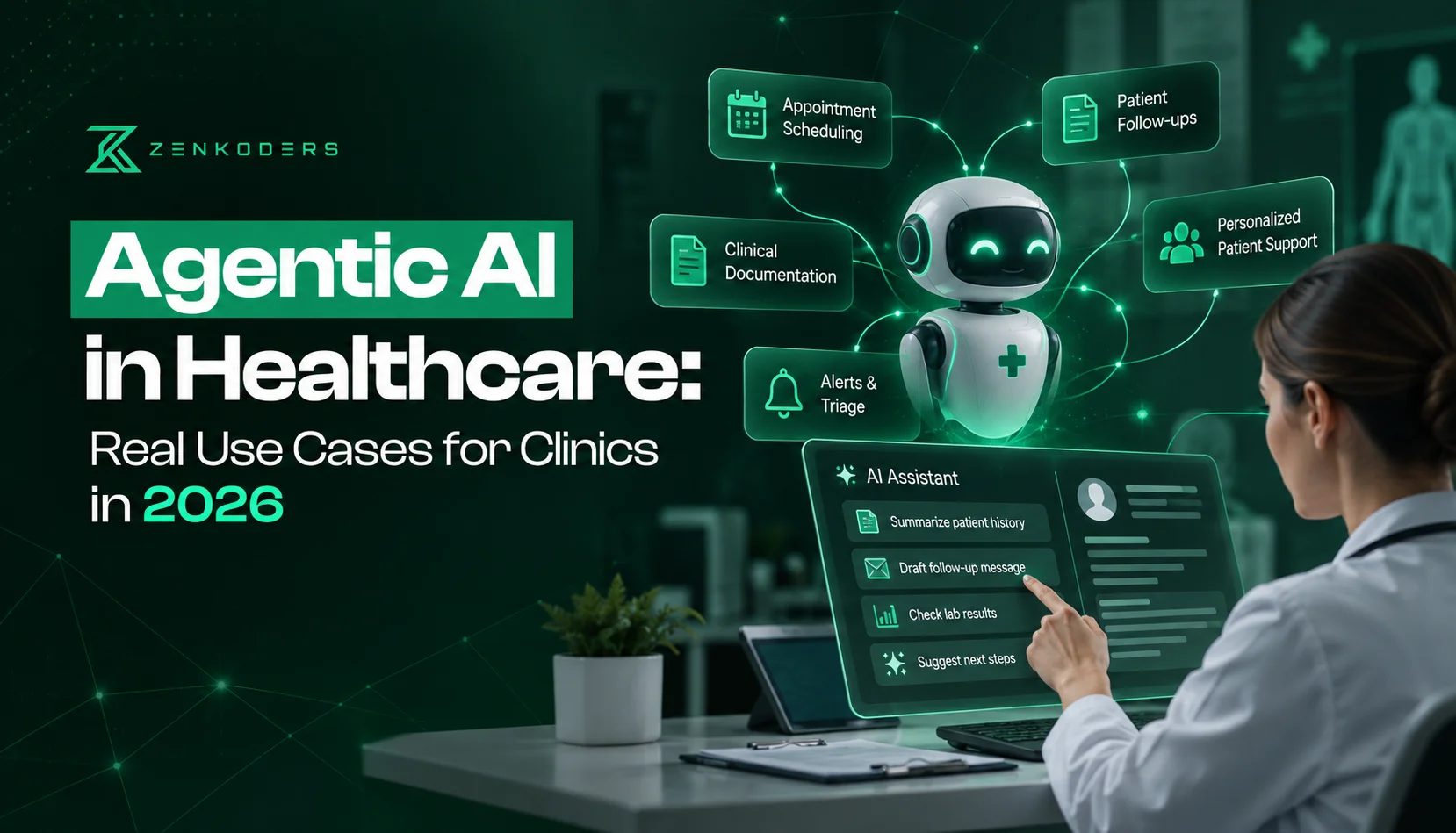
- Healthcare: Agents parse patient records, schedule follow-ups, and flag anomalies using Natural Language Processing (NLP)
- Finance: AI agents scan market data, generate risk reports, and execute pre-approved trades using Reinforcement Learning logic
- Legal & Compliance: Agents review contracts, identify clauses, and flag regulatory risks in seconds
The common thread? Workflow automation that previously required a full team now runs with minimal oversight.
Key Features of Agentic AI Benefits That Actually Move the Needle
Feature | What It Means for You |
Autonomous task execution | Work gets done 24/7 without manual triggers |
Tool and API integration | Connects to your CRM, email, databases, and more |
Memory and context retention | Remembers previous interactions for smarter decisions |
Multi-step reasoning | Handles complex chains of logic, not just single prompts |
Self-correction | Detects errors and adjusts without human intervention |
Scalability | Runs 100 tasks as easily as 1 – no extra cost per task |
The biggest benefit? You reclaim time. Business owners in the US consistently report that agentic systems reduce their team’s manual workload by 40–70%, depending on the use case.
Types of Agentic AI – Which Category Fits Your Needs?
Understanding the different types helps you choose the right solution without overpaying or underbuilding.
1. Single-Agent Systems
One AI agent handles one defined workflow end-to-end. Best for simple, high-volume automations like lead follow-up or content scheduling.
2. Multi-Agent Systems
Multiple specialized AI agents collaborate one researches, one writes, one reviews. Multi-agent systems are used in complex business environments where one agent alone can’t handle all variables. Companies like OpenAI and research labs are heavily investing here.
3. Tool-Using Agents
These agents are built to use external tools web search, calculators, code interpreters, calendar APIs. Microsoft Copilot is a well-known commercial example of a tool-using agentic system.
4. Retrieval-Augmented Agents (RAG-Based)
These pull real-time information from your proprietary databases or the web before acting. Critical for industries where data accuracy is non-negotiable (law, medicine, finance).
5. Autonomous Coding Agents
Powered by Machine Learning and trained on massive codebases, these agents write, test, debug, and deploy code with minimal human input.
Agentic AI in software development is moving beyond basic coding assistance. Autonomous AI agents can now support multi-step workflows involving project planning, code generation, software testing, debugging, documentation, deployment, and performance monitoring.
This evolution could help development teams reduce repetitive work and deliver products faster, but it also introduces important questions about security, governance, accuracy, and human oversight. Explore these changes in depth in our article, Agentic AI Is Changing Software Development Forever: Here’s What Comes Next.
Agentic AI has huge potential, but success depends on the right strategy, tools, and governance. Build AI systems that are not only autonomous, but also reliable, secure, and aligned with your business goals.
Comparison Table Agentic AI vs. Traditional AI vs. RPA
Feature | Traditional AI | RPA (Robotic Process Automation) | Agentic AI |
Decision-making | Limited, rule-based | Rule-based only | Dynamic, goal-driven |
Adaptability | Low | Very Low | High |
Multi-step tasks | No | Partial | Yes, natively |
Learns from context | No | No | Yes |
Tool usage | No | Limited | Extensive |
Best for | Single predictions | Repetitive clicks | Complex workflows |
Pros and Cons of Agentic AI
Pros | Cons |
Massive productivity gains | Requires proper configuration |
Works 24/7 without fatigue | Needs human oversight for high-stakes decisions |
Scales instantly | Initial setup requires expertise |
Reduces operational costs | Risk of errors if goals are poorly defined |
Integrates with existing tools | Security and data privacy must be managed |
How to Choose the Right Agentic AI Solution Step-by-Step Guide
Don’t pick a platform based on hype. Use this decision framework:
Step 1: Define your use case clearly What specific task do you want automated? The more specific, the better your results.
Step 2: Audit your existing tools What CRMs, databases, APIs, and platforms does the agent need to connect to?
Step 3: Assess your data sensitivity If you’re in healthcare or finance, you need enterprise-grade security and compliance (HIPAA, SOC 2).
Step 4: Evaluate build vs. buy Off-the-shelf platforms (like those built on ChatGPT APIs) are fast but limited. Custom-built agents from specialized development partners give you full control and competitive advantage.
Step 5: Pilot before you scale Run one agent on one workflow for 30 days. Measure time saved, accuracy rate, and cost reduction before expanding.
Step 6: Choose a development partner with AI expertise Generic software agencies won’t cut it. You need a team that understands Artificial Intelligence, agentic architecture, and your industry.
Best Use Cases Who Should Be Using Agentic AI Right Now?
Ideal for:
- SaaS Companies – Automate onboarding, customer success check-ins, and bug triage
- E-commerce Brands – Dynamic pricing, inventory management, personalized marketing
- Healthcare Providers – Patient data processing, appointment automation, claims review
- Marketing Agencies – Content research, SEO audits, campaign reporting
- Financial Services Firms – Compliance monitoring, client reporting, fraud detection
- Legal Teams – Contract review, case research, document summarization
Target Audience in Detail:
Decision-makers at US-based SMBs and enterprises who are already using some form of automation but feel limited by what their current tools can do. They want intelligent systems not just scripts – that can handle ambiguity, adapt to change, and deliver measurable ROI. They’re evaluating AI development services and need a trusted partner, not just a vendor.
Why Choose Zenkoders for Your Agentic AI Development
Here’s where most agencies fall short: they know AI, but they don’t know your business. Zenkoders does both.
What makes Zenkoders different:
- Full-stack AI development – From architecture design using LLM frameworks to deployment and monitoring
- Custom agent pipelines – We don’t use cookie-cutter templates. Every solution is built for your specific workflows
- US-market expertise – We understand compliance requirements, industry standards, and the competitive landscape
- Transparent delivery – Clear milestones, regular updates, and zero black-box development
- Proven results – Our clients report 50%+ reduction in manual task hours within 90 days of deployment
Whether you need a single task automation agent or a full multi-agent system powering your entire operations layer, Zenkoders builds it right – the first time.
Common Mistakes to Avoid When Implementing Agentic AI
Most failed AI implementations share the same preventable errors:
- Vague goal-setting – Telling an agent to “improve marketing” is not a goal. Define specific, measurable outcomes
- Skipping the pilot phase – Deploying at scale before validating accuracy creates expensive disasters
- Ignoring data quality – Garbage in, garbage out. Agents are only as smart as the data they access
- No human oversight layer – Agentic AI should augment human decision-making, not replace it entirely for critical functions
- Choosing the wrong vendor – Picking a general software agency instead of an AI-specialized team
- Neglecting security protocols – Every API integration and data pipeline needs to be locked down properly
- Not measuring ROI – Define your success metrics before launch, not after
Conclusion The Time to Act Is Now
What is Agentic AI? It’s the most significant shift in how businesses operate since the internet and the US companies that move first will hold a decisive advantage.
If your competitors are still manually managing workflows that an AI agent could handle in seconds, you already know what the next move is.
At Zenkoders, we specialize in designing, developing, and deploying custom Agentic AI systems that actually deliver results not just demos. From your first discovery call to your first fully autonomous workflow, we’re with you every step of the way.
Ready to build your first AI agent? Contact Zenkoders today for a free strategy consultation and let’s map out exactly what Agentic AI can do for your business.
FAQs:
What is Agentic AI in simple terms?
Agentic AI is an artificial intelligence system that can take goals, make decisions, and complete tasks on its own without needing constant human instructions for every step.
How is Agentic AI different from ChatGPT?
ChatGPT responds to prompts in a single turn. Agentic AI goes further it plans multi-step actions, uses tools like APIs and web search, executes those actions, and evaluates results automatically.
Is Agentic AI safe for business use?
Yes, when implemented with proper guardrails. Best practices include human oversight for high-stakes decisions, secure API integrations, and defined scope limitations for each agent.
How much does it cost to build an Agentic AI system?
Costs vary based on complexity, integrations, and use case. A focused single-agent solution can start in the low five figures, while enterprise multi-agent systems are scoped based on custom requirements. Zenkoders offers transparent pricing after a free strategy session.
What industries benefit most from Agentic AI?
Healthcare, finance, legal, e-commerce, SaaS, and marketing agencies see the highest ROI particularly for workflow automation, data processing, and customer operations.
Do I need a technical team to use Agentic AI?
Not if you work with the right development partner. Zenkoders handles the full technical build; your team simply defines the business goals and reviews outcomes.
How long does it take to deploy an Agentic AI solution?
A focused MVP agent typically takes 4–8 weeks from discovery to deployment. Enterprise-grade multi-agent systems are scoped on a project basis with clear timelines agreed upfront.