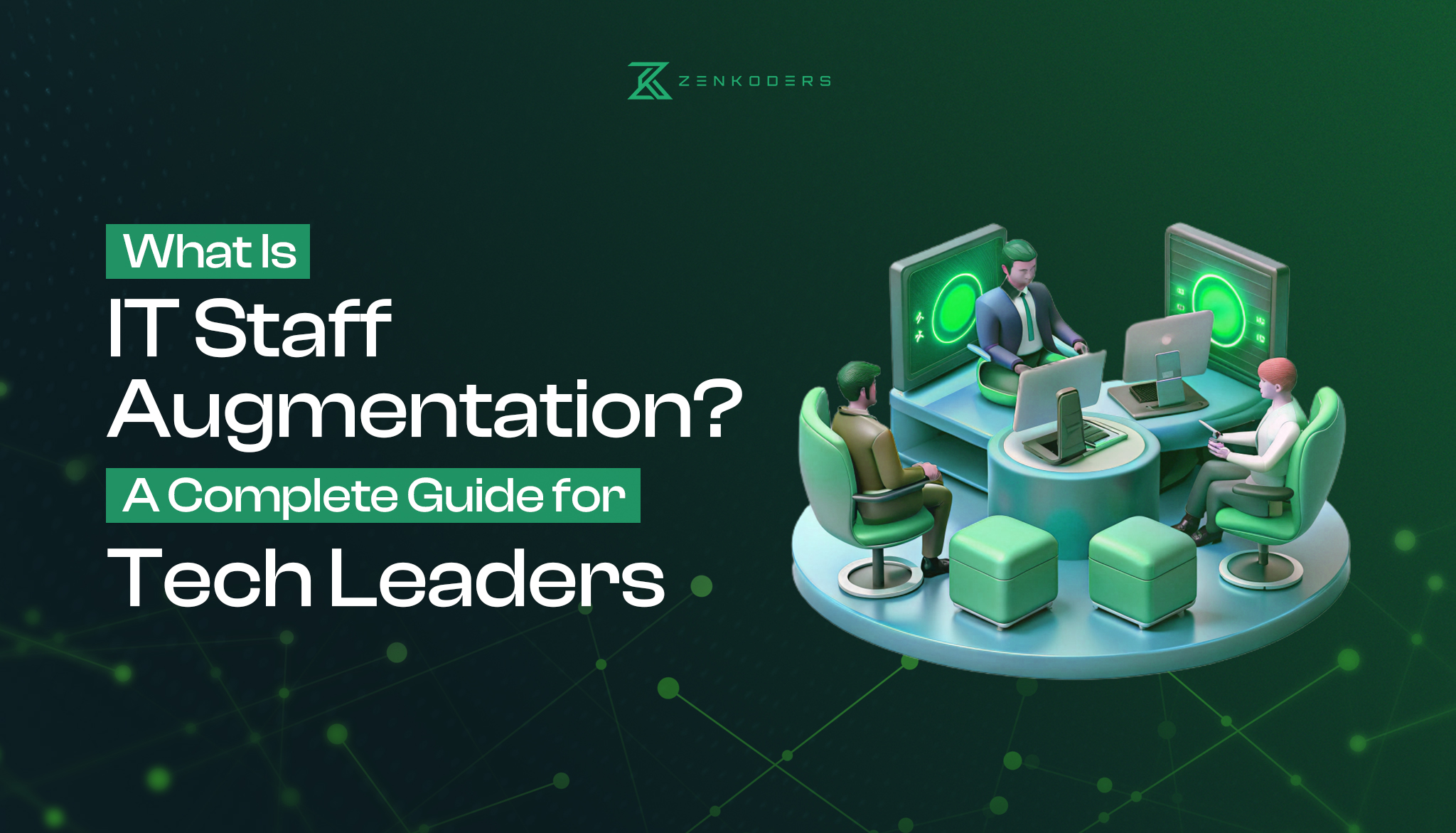

IT staff augmentation is a flexible engagement model that adds external technology professionals to your existing team. The added specialists work within your processes, tools, priorities, and management structure.
Unlike permanent recruitment, the model lets you add capacity without committing to a full-time internal hire. Unlike complete project outsourcing, your business keeps direct control of the roadmap, priorities, and daily work.
This approach is useful when you have a clear delivery goal but lack enough people, time, or specialist knowledge to complete it.
Common reasons businesses use staff augmentation
Technology leaders often consider staff augmentation when:
- A critical release is at risk because the internal team is overloaded.
- A project needs skills that are difficult to hire locally.
- A new product requires more development capacity.
- An employee departure creates an urgent delivery gap.
- A modernisation or migration project needs temporary specialists.
- QA, DevOps, data, or cloud work is slowing the main development team.
- Hiring permanent employees would take too long.
- The company wants to test a role before building a permanent internal function.
The model should solve a defined capacity or expertise problem. Adding people without clear ownership, priorities, and success measures rarely improves delivery.
Technology roles you can add
Depending on your project requirements, an augmented team may include:
Software engineering
Frontend, backend, and full-stack web developers and mobile app developers can support new features, platform upgrades, integrations, maintenance, and product development.
Quality assurance
Manual and automation QA specialists can strengthen test coverage, reduce release risk, document defects, and help development teams establish more reliable testing practices.
Cloud and DevOps
Cloud and DevOps professionals can support infrastructure, deployment pipelines, monitoring, performance, release automation, and operational stability.
Data and AI
Data engineers, analysts, and AI specialists can help organise data, build integrations, improve reporting, support machine learning initiatives, and turn technical information into usable business insight.
Product and delivery
UI/UX designers, business analysts, project coordinators, product specialists, and technical leads can improve requirements, workflows, communication, and delivery planning.
Tell Zenkoders which capability is missing from your team, rather than beginning with a generic job title.
Whether you need one specialist or a full team extension, Zenkoders matches you with vetted tech professionals who fit your stack, timeline, and working style.
Staff augmentation engagement models
Individual specialist
Add one professional to fill a specific technical or delivery gap. This model works well when the internal team is established but lacks one key skill.
Multi-role team
Add several complementary professionals, such as developers, a QA engineer, and a technical lead. This option can increase capacity across a defined workstream.
Long-term team extension
Build a stable external team that works with your internal staff across several releases or an ongoing product roadmap. This model requires strong documentation, communication, and knowledge-sharing practices.
Short-term delivery support
Add resources for a launch, migration, backlog, seasonal demand period, or temporary employee absence. A clear exit and handover plan should be agreed at the start.
Staff augmentation vs. other delivery models
Model | Best used when | Client control | Provider responsibility |
Staff augmentation | You need skills or capacity within an existing team | High | Talent matching and engagement support |
Permanent hiring | The role is central and needed long term | High | Limited after recruitment |
Dedicated team | You need a stable external group for an ongoing roadmap | Shared | Team continuity and delivery support |
Project outsourcing | You want a vendor to own a defined project outcome | Lower | Scope, team, management, and delivery |
Managed services | You want ongoing ownership of a technical function | Lower | Service performance and operations |
Staff augmentation is usually the better fit when your company has an internal product or engineering leader who can set priorities and manage the daily work. Project outsourcing may be more suitable when you need one provider to take responsibility for discovery, planning, staffing, execution, and final delivery.
Industry concerns and how to address them
Candidate quality
Ask how candidates are evaluated for technical ability, relevant project experience, communication, and working style. A long résumé does not prove that someone can succeed in your environment.
Time-zone alignment
Confirm the amount of live working-hour overlap required for standups, planning, reviews, and issue resolution. More overlap may be necessary for fast-moving or highly collaborative work.
Security and intellectual property
Agree on confidentiality obligations, ownership terms, approved devices, repository permissions, data access, password management, and offboarding procedures before work begins.
Communication
Set the expected tools, meeting rhythm, reporting format, escalation path, and decision owners. Poor communication is often a process problem, not only a people problem.
Knowledge retention
Require useful documentation, code reviews, shared repositories, handover plans, and internal knowledge transfer. Important project knowledge should not remain with one person.
Team continuity
Ask what happens if a team member becomes unavailable or the role changes. A responsible IT staff augmentation company should explain replacement, transition, and knowledge-transfer procedures before the engagement starts.
Share your project brief with Zenkoders and we’ll recommend the right profile, no generic job titles, just the specific expertise your team needs.
What determines staff augmentation cost?
The cost of IT staff augmentation varies based on: required technology and specialist skills, experience and seniority, geographic location, working-hour overlap, engagement length, number of professionals, role complexity, management and reporting requirements, security or compliance needs, and urgency and talent availability.
A lower hourly rate does not always produce a lower total cost. Poor role definition, weak screening, slow communication, rework, and frequent replacement can make an inexpensive resource costly. Compare providers based on expected contribution, management effort, continuity, and delivery risk not rate alone.
How to choose an IT staff augmentation company
Before selecting a provider, ask: How do you define the role and understand the business outcome? How are technical and communication skills evaluated? Can our team interview and approve candidates? What time-zone overlap is available? How do you support onboarding and performance reviews? What happens if a resource is not the right fit? How are confidentiality, IP, and access handled? Can the team scale up or down? How will knowledge be documented and transferred? What contract terms, notice periods, and pricing conditions apply?
The right provider should give clear answers. Vague promises around “top talent,” “instant onboarding,” or “guaranteed results” are not a substitute for a transparent process. Get in touch with Zenkoders to discuss your requirements.
FAQs:
How quickly can an augmented team member start?
The timeline depends on the role, seniority, required technology, interview process, and current availability. Defining the requirements and decision process early helps prevent avoidable delays.
Can we interview candidates before making a decision?
Yes. Your team should be able to review relevant experience, assess communication, ask technical questions, and confirm working-style fit before the engagement begins.
Who manages an augmented team member?
In a standard staff augmentation model, your internal manager controls priorities and daily work. Zenkoders supports matching, onboarding, engagement health, and continuity.
Can we add more than one professional?
Yes. You may begin with one specialist and later add complementary roles or form a broader dedicated team extension as delivery needs change.
Is staff augmentation only for short-term projects?
No. It can support a short release cycle, a multi-month initiative, or a longer product roadmap. The right duration depends on the business need and the value the role provides.
How is company information protected?
Security should be based on the engagement’s actual risk. Access controls, confidentiality terms, approved tools, repository permissions, data-handling rules, and offboarding steps should be agreed before access is granted.
When is staff augmentation not the right choice?
It may not be suitable when no internal leader can manage the work, the project scope is still unclear, or your business wants a provider to own the entire delivery outcome. In those cases, project outsourcing or a dedicated team may be a better fit.
Can we scale the team down after a project phase ends?
Yes, subject to the agreed contract and notice terms. A responsible scale-down process should include documentation, access removal, knowledge transfer, and a clear handover.